
What Does Cargo Ownership Tracking Mean in Logistics?
Cargo ownership tracking in logistics is the recording and monitoring of which person, institution or operational party is responsible for a load throughout the operation. Different parties, such as the shipper, warehouse, carrier, hub, subcarrier and consignee, may assume physical or operational responsibility for the cargo at different stages of transportation. Cargo ownership tracking facilitates the evaluation of damage, loss and delivery disputes by making it visible at what point these responsibility transitions occur.
The question of what is cargo ownership tracking should not be evaluated in the same sense as the concept of legal ownership. The structure followed in logistics operations often indicates the party that has the actual control or operational responsibility of the cargo at a particular moment, rather than the economic owner of the cargo. For example, while the commercial owner of the product continues to be the shipper, the responsibility for physical transportation may be transferred to the carrier. Therefore, it is important that the concepts of cargo ownership and cargo responsibility are clearly defined within the operation.
While load tracking in logistics generally focuses on showing where the vehicle or product is, load ownership tracking focuses on who is in control of the load at that moment. It may be waiting at a freight transfer centre, but at this stage the responsibility may lie with the main carrier, terminal operator or sub-carrier. This distinction becomes especially important in international, multimodal or transit operations involving more than one party.
Logistics software cargo ownership records can be associated with order, shipment, vehicle, carrier and delivery information. Thus, in case of a problem, at what stage the load was transferred to which party, along with the pickup and delivery times, can be examined. This structure reduces accountability from relying on verbal communication or manual checking between separate documents.
What Does Cargo Ownership Mean in Logistics Operations?
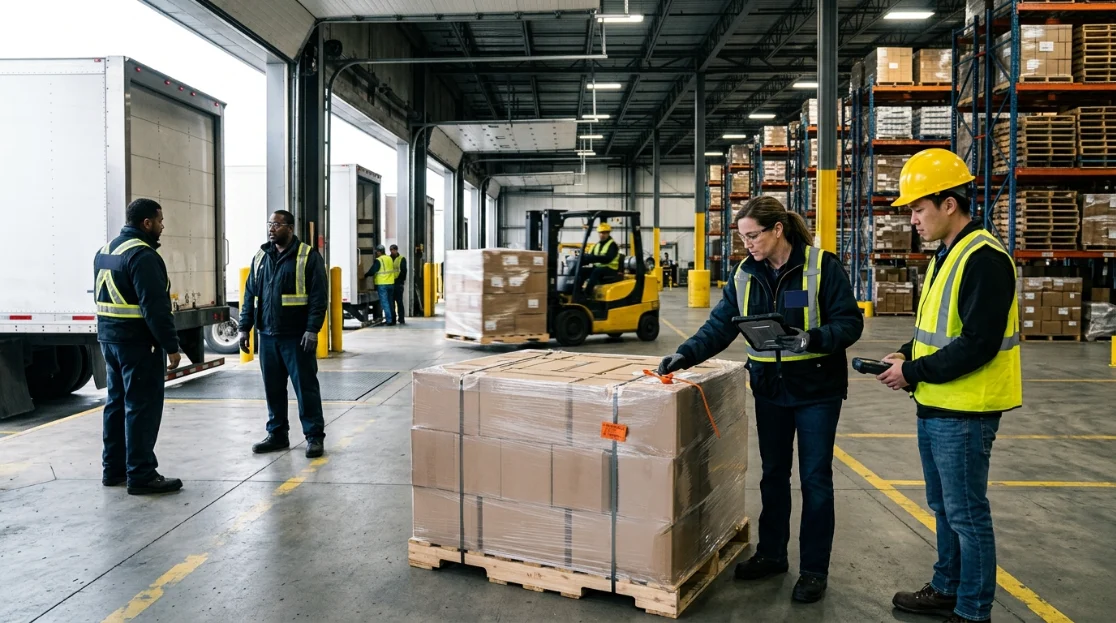
In logistics operations, cargo ownership can be used to express who has control, supervision, or operational responsibility over the cargo at a particular moment. This may vary between different parties from the beginning of the transport until delivery. When the load prepared by the sender is delivered to the carrier, physical control can pass to the carrier. It can then be transferred to a terminal, another carrier or consignee.
The point at which cargo ownership changes should be clearly determined. General records of merely being delivered to the carrier may not provide sufficient information when damage or shortages are found at the time of delivery. The handover point becomes clearer when the delivery date, time, place, delivering party and receiving party are recorded together.
Physical liability and commercial ownership should be distinguished. While commercial ownership of the product may remain with a certain party according to the sales contract, physical responsibility may be transferred to a different institution in the logistics process. Therefore, operational records should clearly show what type of ownership or responsibility is being pursued.
Ownership tracking is also important when the cargo is in the warehouse. Even if the product is in the warehouse, there may be different liability models between the warehouse operator, the shipper or the logistics service provider. Associating warehouse entry and exit records with load transfer information shows which party is under the control of the product in which time period.
In transit transportation, cargo ownership may change more frequently. The prime carrier may drop off the load at a terminal, the terminal may hold the load for a short time, and then another carrier may pick it up. If each of these transitions is not recorded as a separate transfer point, a gap may occur in the chain of responsibility.
Cargo ownership information must be up-to-date not only at the end of the operation but also while the transportation continues. This way, the operations team can more quickly determine which party to contact when a problem occurs with a particular load. This visibility reduces communication time, especially in multilateral operations.
How to Track Responsibility of Freight Between Sender, Carrier and Receiver?
Tracking of cargo liability can begin from the point where the shipper prepares the cargo to be delivered for transportation. Product quantity, packaging status, number of boxes or pallets and special transportation conditions, if any, are recorded. Thus, the initial status of the cargo transferred to the carrier is clearly determined.
When the carrier receives the load, a transfer record must be created. The receiving driver or carrier representative, vehicle information, date, time and amount of cargo received can be recorded. If necessary, a photograph, signature or transport document can be attached to this record. This information helps indicate at what point the carrier's liability begins.
If the load is transferred to a different vehicle or subcarrier during transportation, a new transfer record is required. Even if the main carrier's responsibility does not end completely, it should be seen that physical load control is transferred to another party. Therefore, subcarrier information, vehicle change and transfer time should be recorded separately.
When the load reaches the delivery point, it is transferred to the buyer. The delivered quantity, product condition and recipient information should be recorded. If the buyer receives the products complete and undamaged, the operational chain of responsibility can be completed. If there is an incomplete or damaged delivery, this should be clearly stated in the transfer record.
Signature alone may not be sufficient in terms of cargo delivery responsibility. Whether the delivered product or parcel quantity is compatible with the order, whether there was any damage during delivery, and the buyer's statement, if any, should also be recorded. Thus, it can be seen not only that the delivery took place, but also under what conditions it took place.
Changes of responsibility between parties should be time-stamped whenever possible. Creating the transfer record manually or changing its date may reduce reliability in the event of a dispute. For this reason, it is better to record delivery and transfer information as soon as the transaction occurs.
Records showing who has the load throughout the operation can be kept in a consecutive chain. When all transfers are seen sequentially, from the sender to the carrier, from the carrier to the terminal, from the terminal to the sub-carrier and finally to the receiver, it is easier to determine whether there is a gap in responsibility.
How to Record Load Responsibility at Transfer and Transfer Points?
Transfer points are one of the most critical parts of cargo ownership tracking. Because responsibility may change as the load moves from one transport vehicle or operator to another vehicle or operator. For this reason, not only the transfer took place, but also the situation in which the cargo was delivered should be recorded.
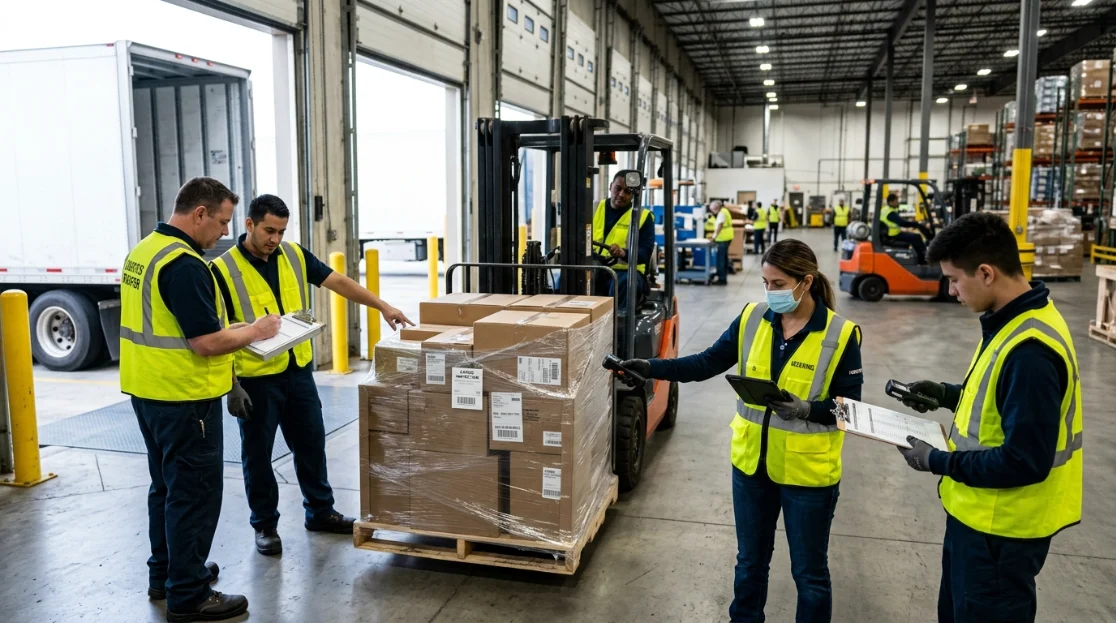
When creating a load transfer record, delivering party, receiving party, date, time and location information can be used as basic fields. In addition, the load amount, number of boxes or pallets, seal number and packaging status can also be recorded. It is important to verify the seal information before and after transfer, especially in sealed transportation.
If product counting is required during transfer, the actual amount should be recorded. If 19 pallets are received at the transfer point while 20 pallets appear in the system, this difference must be marked before the transfer is completed. Otherwise, it becomes difficult to determine at what stage the deficiency occurs.
Photo records may be useful at transfer points. Images taken as the load is unloaded from the vehicle or loaded into the new vehicle allow verification of product and packaging condition. Photographs and description recording are important in subsequent evaluations, especially when there is visible damage from the outside.
Bilateral approval can be used to complete the transfer process while tracking the transfer point. While the delivering party marks the load as exit, the receiving party can create an acceptance record. If there is a difference in quantity or status between two records, the system can make this visible. This approach provides stronger control than one-sided recordings.
Transfer delays also affect liability tracking. If the cargo has been left at the terminal but the next carrier has not yet received it, it should be clear who is responsible during this interim period. Such gaps can be particularly problematic in cases of damage, security or loss.
Records at the transfer point can be associated with transport documents. The risk of incorrect load matching is reduced when the vehicle license plate, driver information, carrier name and shipping reference are all in the same record. This association is important, especially considering that many loads are processed at the same time in high-volume terminals.
When load turnover tracking is standardized, a similar set of information is collected at each transfer point. This prevents the use of only a signature in one operation and only a photograph or free description in another operation. The standard record structure facilitates subsequent comparison and analysis.
How Does Cargo Ownership Tracking Affect Loss, Damage and Delivery Disputes?
One of the most important benefits of cargo ownership tracking is that it helps determine at what stage loss or damage may have occurred. If the cargo is received from the sender in good condition, is recorded as intact in the first transfer, but is found to be damaged in the next transfer, the examination can focus on the relevant time period. In this way, the problem can be evaluated at a narrower point instead of investigating the entire transport chain at the same time.
In cases of loss, transfer records show the last verified point of ownership. If a parcel is recorded as missing at a particular terminal, it is conceivable that the loss may have occurred in the period between previous transportation and terminal acceptance. When there is no record chain, it becomes difficult to determine to what point the load has progressed completely.
The product condition at the time of delivery and acceptance is important in damage records. If the carrier received the cargo damaged, this should be recorded initially. Otherwise, it may be assumed that the damage noticed at the end of delivery occurred during transportation. Photographs, descriptions and approval records support liability assessment.
Cargo ownership information is also important in delivery disputes. If the buyer claims that he did not receive the product, the transfer record, delivery time, recipient, signature or other delivery evidence can be examined. Likewise, in case of deliveries made to the wrong person or the wrong location, it can be seen how the transaction is carried out through the chain of responsibility.
In assessing the carrier's liability, not only the period during which the vehicle carries the load, but also the moment at which the load is received and transferred should be taken into account. A problem that occurs before the carrier officially takes delivery should not be evaluated in the same way as a problem that occurs under its own responsibility.
Cargo ownership tracking can also help collect necessary documents faster in insurance and damage investigations. Case history becomes clearer when transportation documents, transfer records, photographs, proof of delivery and time information are kept under the same operation. This may shorten the review time.
The existence of liability records can also reduce unnecessary disputes between parties. When it is clear which party controls the load over which time period, the need for evaluation based solely on verbal statements is reduced. However, records must be kept accurate, timely and with a history of changes.
Load ownership tracking also helps identify recurring problem areas. If there is persistent damage at a specific transit point, missing items on a specific carrier, or a discrepancy in a specific delivery model, this can be analyzed. Thus, the tracking system can be used not only to collect evidence after the problem, but also to reduce future risks.
Continuous monitoring of cargo responsibility throughout the operation ensures that the transportation chain becomes more transparent. Clearly recording every transfer point, from sender to receiver, makes it visible who is in control of the cargo as well as where it is located. This structure creates stronger process control, especially in multilateral and indirect logistics operations.